Friday, April 30, 2010

The big debate - Vote Health

With the current election and party campaigns in full swing, I thought it'd be a good idea to pool peoples opinions on exercise. For those of us who enjoy it, we all have our own preference and often are quite passionate as to why we do it.

This blog is totally designed to get as many people as possible to read and add their preference and argument for why.


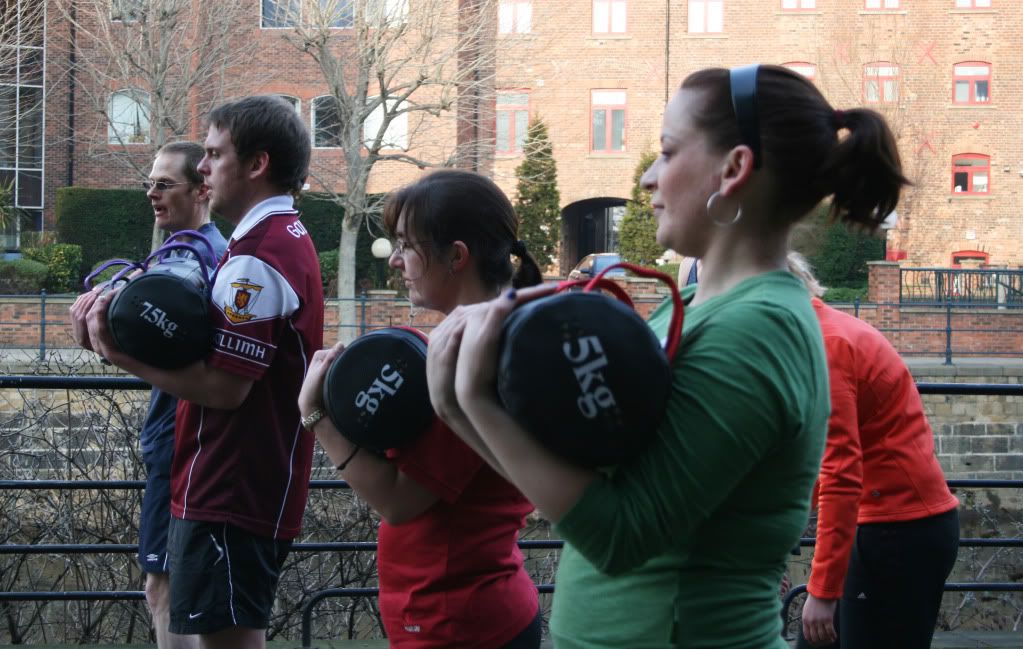
I'll start with saying kettlebells are something that most people should be doing. With the static and seated nature of modern living, glutes and low abdominals are too underactive, low back, hip flexors and hamstrings are generally speaking too dominant and kettlebells help with all that as well as improving cardiovascular fitness, strength, flexibility and they're no impact on the joints when done properly.

They're not everything but can form a great foundation. Who's next?

Wednesday, April 28, 2010

Does state influence exercise?

We all know that doing exercise in some shape or form can be great for our health but why is it important to be in the right state?

Well, there are a number of reasons. Firstly, however you are feeling will control your hormonal balance, the level of cortisol, adrenal function and this manipulates how your body creates and thrives with energy. Already, just by thinking in the right way you will make massive strides towards getting your body to deliver the right response for you whether it be weight loss, increase stamina or strength. It is true that being upset, angry or depressed increases fat storage. Think of it like this, primally, times that would stress the mind and body would be starvation or being under threat. As a coping mechanism, the body would realise this and store fat as a means of survival.

Secondly, your state dictates your mental energy, neuromuscular focus and your muscular response. If you want to go running but you're feeling lousy, worthless or upset then your body won't be operating properly. You'll have less access to energy reserves, your body will be at greater risk of injury and you'll be missing out on a heightened sense of control physically.


So, how do you adopt the right state for what you want? Well, state should be situational just like many things. By matching your state to the task in hand then you'll be setting all your internal control settings to the right coordinates. If you are wanting to stretch and increase flexibility then you should be relaxed, decresing muscular and neurological tension. If you're going to lift weights then feeling strong, decisive and engaged would help make your body alert, fired up and present.

By taking a few minutes prior to exercising and reflecting on the type of exercise in hand, you can start to identify what state is needed. Once you know the state, then think back to a time when you had this, put yourself mentally back in that state and walk with it into the new session.

Again, primally, fight or flight responses would control the mental state relative to the situation accordingly to give the body what it needs. In times of danger, being alert to move quickly, be strong and decisive would improve the likelyhood of survival. Just because modern lifestyle doesn't involve the same dangers or conerns doesn't mean that the bodies requirements aren't the same.

As a final thought, focus and engagement are important but don't ignore the importance of play. Being social, fun and interactive with movement is very much a natural thing and should be incorporated into your habits.

Phill

Wednesday, April 21, 2010

Why is exercising too much dangerous?

It's quite strange that over the last few years my life has been shaped around exciting both trainers and individuals about exercise and movement and here I am now talking about putting a cap on the exercise you do. The two biggest trends that I see are that people either don't exercise enough or they do too much. It seems that exercise is like a drug, used in the right way, it can do wonders for the body yet used excessively, it can be dangerously harmful.


We're all well aware of the benefits of exercise and how it remains a crucial part of a healthy lifestyle yet few really understand the physiological and psychological implications of over-exercising. It's worth having a look at some of the common issues that arise:
  • Instead of building muscle, too much exercise destroys muscle as the body receives insufficient nutrition and recovery time forcing it to break down muscle tissue for energy.
  • Bones, cartilage, tendons, ligaments and joints are all under excessive pressure and often become damaged. When minor injuries aren't allowed to heal, these often result in long term damage.
  • Females over-exercising can disrupt the balance of hormones in their body including the menstrual cycle. Some females lose periods altogether and can suffer from premature bone loss.
  • Exhaustion and fatigue.
  • An even bigger threat is the strain put on the heart and cardiovascular system. When an individual over-exercises as well as committing to unhealthy weight loss through crash diets, restricting intake, diet pills or vomiting, the stress put on their body can be sometimes a fatal mixture.
  • Depression and anxiety can plague compulsive exercisers. Fixated on keeping fit completely rules lives. With low self-esteem, negative self-image and often a feeling of worthlessness, individuals can often avoid withdraw from friends and family to spend excessive time fixated to exercising.
Well, how can we help. Spotting warning signs will help identify this common problem. A person may be exercising compulsively if he or she:
  • Never skip a workout, even if tired, sick or injured
  • Doesn't enjoy exercising yet feels obligated to do it
  • Feels irrationale guilt or anger when missing a workout
  • exercises for twice as long as normal in the event of missing an exercise session
  • Is constantly preoccupied with his or her weight, shape and exercise routine
  • Doesn't like to sit still or relax for constant fear of not burning enough calories
  • Has lost a significant amount of weight
  • Exercises more after eating more believing that meals must be 'burnt off'
  • Skips meeting friends and family and gives up responsibility to spend time exercising
  • Seems to base self worth on quantity of exercise or effort levels
  • Is never satisfied with his or her personal achievements
Spotting them is half the battle. Remember that in your opinion, it may seem blatantly obvious that their exercise habits or under eating habits are compulsive. Yet these are part of what the individuals believes and dismissing these as excessive and ridiculing them may not be a great way to improve rapport or understanding. Be kind, loving, encouraging, listen and try to help the individual become more confident. In extreme cases, always seek professional guidance. This ideally would be with the permission of the individual but compulsive habits can be fatal in extreme cases. Let common sense prevail. 

Wednesday, April 14, 2010

Are you sitting comfortably?

Ok, the last entry was not so much of a nutshell and more a giant coconut shell so my job here is to be a little more succinct.

To wrap up the 6 key points of health I'm going to talk a little bit about recovery and relaxation. Something that seems not to be a common part of modern living. Work is hectic, home is hectic, family is hectic, having an iPhone is hectic, let's face it, life is pretty hectic...if you allow it to be!

Just as, if not more important that doing exercise, recovery dictates whether or not you acually benefit from the exercise and the healthy food that you're taking on or whether it causes stress and damage.


The key thing that drives this is the nervous and hormonal system. These things must be considered. You have probably heard the term fight or flight. Todays society can often cause people to remain in a fight of flight state for long periods of time. This can mean constant pumping of adrenaline into the body, elevated heart rate and blood pressure and the enhanced release of cortisol or other state hormones. These are the key control units that make certain things happen. For example, if you have are stressed about something, regardless of what activity you are doing (running, watching TV or eating) then your body releases cortisol.

Cortisol can be a positive input to the body when not prolonged: increased cognitive function, temporary increased energy levels, immune function and inflammatory response. However, when state isn't returned to the relaxation response then the body can suffer: blood sugar imbalances, supressed thyroid function, decreased bone density, decreased muscle tissue, high blood pressure, lowered immunity and increased abdominal fat.

There are a number of key aspects to recovery and improving the relaxation response:
  • Getting quality sleep - everyone is different and notice that the term is quality. Not just having enough sleep but real quality. Our ancestors used to sleep from dusk until dawn. If you're waking tired then the quality may not be there.
  • Clearing the mind - the conscious mind is not designed to be constantly task orientated. The unconscious mind can keep whirling whilst you refresh your conscious. Think of it like a web browser, when you open more and more windows when surfing the web, the speed suffers and becomes disorganised. This is precisely what happens with the mind. Try and clear your head atleast once daily. Whether it is music, stretching, going for a long walk, exercise or kareoke. Clearing the conscious mind is essential
  • Muscular Recovery - When your body has undertaken a demanding or physical task, let it recover. Long runs, intense exercise, lifting weights or manual work pull, stretch, impact and ask a huge demand of the body. The only way you'll recover is by giving the entire system time. Upto 48 hours is often necessary for the muscles to repair and as you get more and more in tune with your own body you'll learn to know what it needs to fully feel repaired, strong and revitalised. (Starting exercise feeling sore, tired and low in energy is a very clear message - your body isn't recovered, therefore it won't benefit optimally)
  • Nutrition - Getting the right sort of foods into your body is essential. Remember that for the purpose of recovery, your body does not store lots of readily available energy stores. When exercising, post exercise nutrition is paramount. Think of it like hunting, primal man worked hard for a catch and enjoyed the feast soon after. If your body works hard then enjoy your catch straight away. The sooner the better as your body will crave energy - if you wait over an hour then your body will have already started to look elsewhere for energy supplies (your muscles)
  • Hydration - As I mentioned previously, everything that occurs in the body requires the presence of water. Regular sips are best and avoid naughty disguised wannabees like coffee, cola, sugary drinks and other fluids that do not hydrate the body one iota. Also, drink water at room temperature to benefit from it more rapidly.
Hope this is useful. Just about to get our new outfit site launched - exciting times. http://www.outfit-uk.com/

Phill


Saturday, April 3, 2010

Exercise in a nutshell

Well, here is me trying to wrap another huge subject up in a very short effort. Exercise is one strange topic and I honestly don't feel like it is truly understood at all. In general terms, people seem to do far too much of it or not enough. So, how can we get it right? Just like many things - unfortunately, we're all completely different machines and therefore cannot operate by the precise same guidelines. Understanding your own body will help you move towards finding out how best to service it.


If you look at modern lifestyle, it is so far completely removed from not just a few thousand years ago but a few hundred years ago. Firstly, we spend hours in a sitting position, this just isn't natural and causes no end of damage from a functional perspective. In short, hip flexors become hypertonic, shortened but weak, glutes become phasic, lengthened and inhibited which then causes the stabilisers of the hips, spine and organs (the core) to then become inhibited which forces lower back muscles to take over in holding your torso up-right. We are animals and if you look at the animal kingdom, I'm sure we could all agree on a number of instinctive priorities which reside over most carnivores: hunting, forraging, building home, maintaining home, procreation and upbringing of young. Well, many of those still remain relevant but some have hugely evolved. Hunting and forraging is done mainly in supermarkets, online, over the phone and at the nearest fast food spot. Building home is done by builders. Maintaining is done with a vacuum cleaner, a feather duster and some Mr Sheen. Ok, you get the picture, I could go on. The fact is that whilst lifestyle has evolved massively, the body's requirements haven't and the clear evidence of this is that obesity levels have never been so frightening, back pain, chronic injury, RSI, disease, are all terms that scarily we can associate with close friends and family.

Here are some simple pointers that can help you make the right decisions when exercising:

  1. Mix what you do! The body is designed to move and function in all manner of ways. By mixing steady controlled movements with higher intensity, you'll support your body by achieving greater stability and not just lots of mobility. Repeating one specific pattern like cycling over and over again can cause problems. Include as many different patterns as you can into your exercise: extension, flexion, squat, lunge, push, pull, hold, roll, jump, walk, crawl, run, bound, abduct etc. Not only will your body benefit more, your exercise will be heaps more interesting.
  2. Work out and work on! Since the 80's Jane Fonda revolution, many people seem to believe that exercise has to be fast tempo, sweaty and constant hard work. As I've already mentioned, the body is designed to do all sorts of key functions, working on your posture and alignment is just as important as getting moving. Having an efficient kinetic chain (your musculature and skeleton) will help you get the most out of everything you do.
  3. Commit to things you enjoy! If you don't enjoy something, don't kid yourself and find something else. Using running as an example, many people don't like it yet force themselves with grimace and all to put on the trainers and take to the streets. Going for a long and brisk walk would be just as, if not more beneficial.
  4. Include more social activities! You may be in a minority and not enjoy the company of others but we are social creatures and right to a genetic level, we need interaction, support and social engagement. Not only will the time seem to pass quicker, but you'll learn more, have more motivation and statistically, you're more likely to stay with it.
  5. Make time for recovery! Think of it like this, if you were having to hunt for food and you just had made a really tough but great catch which took the wind out of you, then you won't need to go hunting immediately. We hunt because we have to and the eating and recovering part are essential to your body for it to actually benefit. Remember that exercise is stressing and damaging that body. The only reason that we benefit from it is through the repair that occurs afterwards. If this is non-existant then so is the benefit.
Hope this is useful and I'll be adding more to this rather large topic in future blogs.

Phill


Wednesday, March 24, 2010

Nutrition

Probably the biggest and yet least understood topic when it comes to health, fitness and wellbeing. To try and summarise it in a blog is a big challenge so I'm going to avoid specifics and instead, look at some common sense principes that can help.

Well, firstly, correct me if I'm wrong but the general perception of food now is luxury, comfort and taste but essentially food is fuel and should be seen as this. The problem is that we've developed as a race to now modify taste, growth, genetic make up and pretty much any aspect of food stuff for the benefit of convenience and satisying seemingly sweeter tooth.

Don't get me wrong, food should be enjoyed but also understood. Like the body of any other creature, the human body is a machine. And just like a machine, it requires the right types of fuel and nutrients to operate properly and effectively. The mystery of nutrition breaks down into not just figuring out what foods work well for you, but also when to eat and how. I'm not suggesting that we all eat like primates but looking at the eating habits of animals helps understand how the body is intended to take on fuel. With food being overly available nowadays (certainly in the western world) it can be a challenge to know when to eat. Generally, the wild habit of a creature is to hunt, eat and sleep. This just doesn't really equate to modern lifestyle as checking emails and blogging doesn't fit into this. However, we can draw from these principles. One key is that eating comes after the hunt which in modern terms is exercise and any efforts that expend considerable amounts of energy. Food is there to refuel, repair and revitalise. This in my experience is one of the biggest problems with many people's nutrition. It seems to be a common belief that doing exercise just burns calories and so eating afterwards would be crazy as that was the entire purpose for exercising. It doesn't work like this. The body can only store a very limited supply of readily available calories and with exercising essentially being damage, without replacing, refuelling and repairing, proteins and nutrients are taken from muscles and other body cells which then leave the body open to all kinds of problems.

Just like you wouldn't try and fuel your car on lemonade, you wouldn't knowingly want to try and run your body on something that just did it harm. Well, maybe this is something to think about when putting items into your trolley. Here's a few simple suggestions to help get the right foods for you:

  1. Only eat things that were once living (I know Mars is a planet but that's no excuse)
  2. Don't go to the super market when you're hungry
  3. Eat fresh as much as possible
  4. Plan your meals - bored of eating the same foods? google foods beginning with...(go through the alphabet)
  5. Make you plate as colourful as wonka-land with fresh foods
  6. Don't leave huge gaps between meals
  7. Continually sip plenty of water
  8. Sit down to enjoy your meals and try to eat in company when possible
It is a few pointers and Jenny would be happy to give you more specific support if you'd like to find out more jenny@creatingchaos.co.uk

Phill and Jenny

Wednesday, March 17, 2010

Drink your way to a thinner waist line


I must apologise for the constant reference to weight loss, I'm just very aware that when talking about health related things, relating it to something that people want really helps people engage in what is being said. In the world that we live in, weight loss is by far the biggest goal on a fitness level for most people. You only have to pop to your nearest newsagents to see that many front pages on tabloids and publications make direct reference to weight loss, some amazing super pills, a current celebrity who has either put weight on or been on a journey of weight loss.

So, back to the article. Well, firstly, I'm not talking about wine so put down the bottle. I'm purely talking about water. It's a remarkable mineral and no matter how much the human race evolves, it's importance will never leave us. As I have previously mentioned, the body is made up of almost 70% water. Every reaction and process that takes place in the body relies on the presence of water. This includes repair, growth, metabolism, digestion, detoxification and heaps more.

One of the problems is that nowadays, although many drinks seem to be water based, they contain so many other additives, chemicals, diuretics that can almost completely inhibit the benefit of what the water would provide. Diuretics are one of the most common problem chemicals that swarm common beverages. Coffee, tea and cola all contain the diuretic caffeine. This elevates the rate of urination and serves to attack hydration on a cellular level meaning your cells start to dry up like prunes.

Even if you eat a seemingly healthy diet or do a reommended amount of exercise, not being hydrated means that you won't benefit like you could do. Cells won't have the water levels to execute cellular repair and the break down of fat and sugars to create energy will be pretty sluggish.

How much water is recommended? As a rough guide, a daily intake of 1 fluid ounce of water for every kg of body weight will keep your body sustained. Further to this, 1 litre for every hour of exercise.

The easiest way is to have a bottle of water with you at all times. Having cups and glasses of water now and again can be difficult to monitor but if you have a litre bottle and look to drink two bottles worth through the day (depending on your bodyweight) would be easier to manage.

Regular sips and actually drinking water at room temperature will also benefit you as your stomach won't need to actually warm the water up prior to it being used throughout your body.

Headaches, tiredness, lulls in energy and even migraines can often be symptoms of dehydration.

Monday, March 8, 2010

Breathe your way to a great core

Ok, now we've looked a little at state, I'll move onto breathing. That said, I will come back to state as it is incredible how much it controls.

Working in this industry for a few years, I have had more strange looks when I tell clients we're going to get them breathing properly than anything else.

There are a number of things I'd like to go over with breathing, initially the function of it within most adults and also, ideal application of breathing within exercise.

As I mentioned in an earlier blog, as babies, we all breathe from our stomachs, this is the natural habit as trends go, we unlearn through adolesence into adulthood. The problem being that as we breathe higher in the lungs, the usual recruitment of the lower abdominal area becomes completely redundant. In an area that, due to prolonged periods of sitting down is already very dysfunctional, this almost completely confirms the need not to engage within low trunk (inner core units - transverse abdominus, mulitifidus, pelvic floor, diaphragm) and subsequently, the upper stomach, thorax, chest and shoulder areas become overly involved in respiration. Again, these areas, due to postural dysfunction are highly overactive and become more and more tonic leading to further postural issues.

It's probably about time that I gave some ideas on how you can improve breathing. Well, before I mention an exercise, it is worth knowing that when embedding a new pattern of movement or habit to the body, it can take around 2,000 repetitions. However, when trying to correct a faulty pattern or habit, it can take in excess of 5,000. Needless to say, practice makes permanent and is very necessary to achieve automacy (unconscious competency).

1. Lying on your back, knees bent and feet flat, relax all shoulder, neck and back muscles.
2. Inhale through nose and simultaneously inflate the stomach.
3. Once stomach inflated, draw stomach by pulling naval back towards spine
4. Expire breath through the mouth and look to achieve a stronger abdominal contraction through expiration
5. Look to encourage the lower abdominals doing the work throughout steps and return to step 1. Repeat for 3-5 minutes

A really simple exercise that is designed to encourage this habit within function and movement and not just isolation. It is crucial initially to isolate this pattern as attempting into movement immediately involves a huge number of stressors and deomands.

Finally, what I'm going to mention is awareness of breathing. We all develop habits of breathing which are usually done at a subconscious level. One is specific to running. Many runners at some point come into contact with niggles and small injuries that can be tough to shake off. Many that are associated with impact but difficult to accurately pin down. As we have already illuded, expiration is a contraction and when breathing out whilst running, a certain amount of pressure is created. Most runners breathe out whilst stepping onto one side only during running and over time, this increased pressure can cause significant problems within the musculoskeletal system. If you want something to occupy your grey matter in your next run, try alternating the side that you breathe out on whilst running.

That's probably enough to take in for now

Phill

Wednesday, March 3, 2010

Getting fit and staying fit

Further to the first blog, I've decided to break down the key stages that I mentioned as the key steps to fitness.

Fitness is quite a subjective term. It's pretty vague and only has true application for the activity in question. In my short experience, I've seen how rapidly people can become very focussed on health and wellbeing and equally, how rapid can lose the desire completely. The real driver when it comes to consistency is thoughts and whether you like the notion or not, it is always a decision. We all have the choice of whether we eat fast food 5 nights a week or whether we cook from fresh. We all have the choice of whether we finish working out at the first spot of a perspiring brow or whether we push ourselves further than before.

Having personal experience of working towards a very specific event, I feel confident that I understand the level of commitment needed to start and stick to a journey of fitness. The actual doing of exercise is a pretty small part of the process. One of the greatest key points is being in control of your life! It is worth answering this question for yourself:

Are you responsible for your life, your success and your failure or do you feel that you're often a result of bad luck and suffer due to the actions and behaviour of others?

The reality is that we all have the capacity to control our own lives, it is merely deciding to do so that makes the difference. As a child, I always noticed that on one level people fall into two different brackets: they're either spectators or participants. I'm sure we can all resonate with the type of people who constantly talk about the lives of others, passing opinion and commenting on situations, sometimes positively and sometimes not. Finally, there are those that just get on and do! They're busy, organised and constantly engaging in the fruits of life and commonly it is these types of people that are successful. Deciding which side you are and which side you want to be is merely a choice.

It's all very well me writing a simple classification and effectively becoming a spectator in that but how can you improve your ability to become a do'er?

Well, in my experience, it is a science. There are certain trends that successful people tend to follow. Some of these we've all done in the past and often without really knowing that we're doing them. Hopefully this makes sense and although I'm writing it specific to getting and staying fit, it is very much a frame that can be employed against pretty much any field.

You may be aware of the SMART goal setting. Just to recap - Specific, Measurable, Agreed, Realistic and Timebound. A great and simple structure for embarking on any fitness journey. It's essential to have a specific goal that is attainable, set to a date and true for you. However, there are a couple of things that aren't in this system which are possibly the most important. When making decisions, we are all tied with emotions. Emotions are the most powerful drivers in the body and knowing this allows us to employ them for positive results. What I would suggest is using a SMARTER system to embark on a journey. The additions are Emotional attachment / enjoyment and Reward.

Emotional attachment is understanding why the goal is important to you and you can do this on your own. If your goal is weight loss, ask yourself 'for what purpose'. You can repeat this question until you get to an answer which has some emotive weight within you. You are the only person who will know this and knowing this helps you understand the real intention behind your desires. As you understand the intention, you'll be able to remind yourself more frequently of the true intention. Further to this, enjoyment is crucial and again, you are the only person that knows whether or not you enjoy something. When it comes to exercise, there are so many options out there that there is never a need to drag yourself through 60 minutes of boredom or anger. Test, adjust and figure out what you enjoy. Don't give up looking until you are absolutely convinced that you truly enjoy whatever you are committing to.

The final part of the acronym is Reward. The competitive nature of modern living has somehow removed the skill of self-gratification. Acknowledging your own achievement is a crucial aspect to a balanced mentality. Make sure that when you embark on a journey, have something clear that will be the reward to mark effort and commitment...and stick to it.

When I decided to run 7 marathons in a week, my driver was 3 weeks in New Zealand. On day 2, having tripped and twisted my knee, the last thing I wanted to do was get up and run another 5 and a half marathons. However, the emotional driver that I had and the reward were so great that I actually don't remember focussing on my knee for the rest of the week.

The mind is a powerful tool, direct it towards the things you want and have an awareness of the things that you don't.

Phill
Monday, February 22, 2010

the secret of weight loss

As it is something that almost everyone seems to have some level of interest in, I thought it be a great topic to begin the blog. Weight loss is something that is sought after and branded as a necessity for keeping up with the jones's. Staying at your fighting weight, stripped to the bone almost seems to be marketed as a positive thing and whilst I don't necessarily agree with this, I appreciate that it hits a lot of buttons for a lot of people.

The problem in my opinion is that people purely look at the result 'weight loss' and rarely at the what actually delivers this. The easiest and quickest options are rarely the most long standing but to achieve sustainable weight loss, it's crucial to look at the whole picture as ultimately, all you're asking is that the body starts working properly. This would make sense as the body is an incredible machine and working properly, it wouldn't be natural for it to be in overweight state or obese. The body is designed as a hunting, gathering and functional unit that is born to survive. When it comes down to it, all weight loss effectively is getting to body to work properly. For this to happen, there are 6 key functions that need to be working properly, many of them, we're comfortable with but it's crucial to go back to basics. Modern lifestyle is a million miles away from what the body requires. So, what are these steps?
  1. State - how your thoughts control your life or how you control your thoughts
  2. Breathing - Breathing from the lower 3rd of the stomach and not the chest (most adults breath shallow from the chest)
  3. Hyrdration - Upto 70% of the body is water so it stands to reason that being hydrated is crucial to the internal function of the body. Indeed every occurance within the body requires the presence of water
  4. Nutrition - What a huge topic - the simple rule is, if it wasn't living, don't eat it
  5. Movement - Stability is crucial before mobility, and then comes strength, endurance and all the other more goal orientated drives
  6. Relaxation - Often ignored and seen as a luxury, a crucial focus that should be as important as any other regular fixture
I'll be putting more and more onto the blog with some videos and pictures but this should hopefully drive a few thoughts

Phill