Wednesday, June 2, 2010

Why indoor fitness and gyms just don't make sense

The funny thing about what gyms are nowadays and how they started out is that there is a real separation.

The first ever gym was designed as a project to look at social interaction and motivational impact of friends and family being mustered in one place and encouraged to engage and participate in activity. That was the sole intention of the very first gym. So, bearing that in mind, can we honestly say that the gyms of today share the same values and ethics?


Certainly not in my experience. A few observations of my own would be that:

  • They are loud, most people have headphones in and often anti-social. Despite many gyms being packed at peak times, they can often be very lonely places which can cause increased levels of cortisol, increasing fat storage and decreasing the benefits of exercise
  • Most gyms are clad with mirrors. The intention is clear, to help people montior and improve form and posture through movement. However, the result is that many people distort their own form to keep looking at what they're doing in the mirror which can't possibly assist their technique. In addition, mirrors often cause people to feel self conscious which can then result in the above mentioned release of cortisol.
  • Gyms are filled with machines built by engineers, not biomechanical or physiological specialists. Most gym machines result in distorted patterns of the body as it is forced to work around levers, pulleys and devices which tend to isolate muscle groups. The body is a single unit and should be conditioned in that way. Not all machines are bad but generally speaking, resistance machines may produce that short term muscular fatigue and burn but long term, they can produce imbalanced function, weak core stability and poor muscular firing technique
  • Gyms are another air-conditioned environment that we force ourselves into. You only need to look at the rising levels of asthma and respiratory disorders to understand that some habits of modern living are doing nothing for our breathing function. The body isn't designed as a creature that is bound by four walls yet we, as a civilisation are spending more time than ever indoors. When exercising, our immune function is more susceptible to infection with our defence barriers being lowered and re-conditioned air is horrible for carrying airborne infection and disease. This just doesn't add up does it. A good dose of fresh air cannot be over-praised for it's immediate benefits to the body, internal and external.
  • Exercise should be fun - I'm taking a gamble on this one as I really don't frequent gyms - the only time I do is when we deliver our courses. However, I'm going to suggest that for many, the whole gym experience isn't that much fun. From my last visit, I visibly remember seeing people that looked sad, de-motivated or even aggresive in their approach to exercise. Come to think of it, it's no wonder why - with all the confusing messages within the health industry, the image focussed media and the constant re-invention of 'what's good and what's bad', their annoyance is understandable.
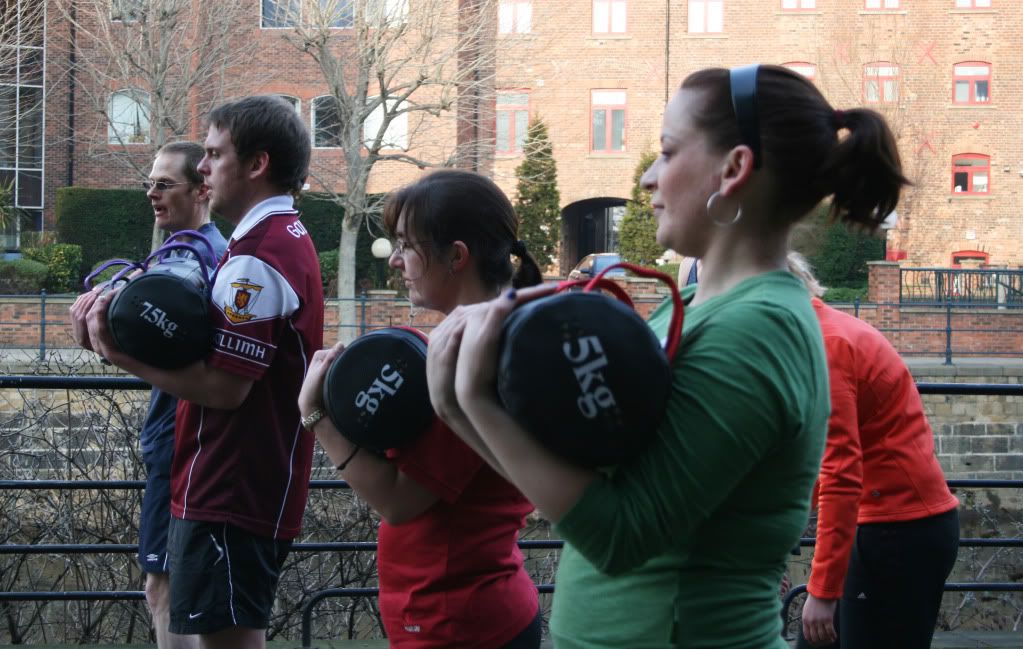
So, what's the solution - well, it is of course, get outside. Whether it's walking, jogging, climbing a hill or joining an outdoor exercise group, being outdoors will by far and away benefit your body in ways that far superceed being bound indoors.

Wednesday, May 26, 2010

Understanding Primal Flow

After more and more interest being taken with Primal Flow, I thought I'd write a little more about about what it is, how it came about and how it can benefit.

Looking back at my coaching career so far, even from the very first courses I attended, I remember always thinking that repeating the same movement over and over again can't be that good, however, in the early days, I really didn't know any better and so just went along with the trends that were and very much still are instructed. As my confidence and understanding of the body grew, I started to experiment more with different ways of challenging and conditioning the body.


When it comes to exercise, for me, there are a number of absolute musts with any exercise or pattern:

  • It must be functional - if the movement doesn't serve a purpose then isn't doing the body, posture or alignment any favours
  • It must be safe - understanding the internal workings of the core, inner stabilising units and outer global units ensures that all the movements work with the flow of the body and not against them
  • It must be progressive and effective - challenging the body is the only way that exercise truly benefits, by knowing your level, ability and making the programme progressive, you can rest assured that your programme will be hugely effective
  • It must be interesting - exercise should never be numb, mindless or a duty. Looking at primal man, exercise was purposeful, demanded thought and deliberation and always had an objective be it hunting, building or excaping danger.
Having been working on PF for a few years, many clients will have experienced numerous sequences and flows without knowing but now, the concept is completely formed and ready to take flight.
The benefits of this type of exercise can be shaped in pretty much any direction:
  • Physiological - Strength, power, conditioning, endurance, balance, agility, alignment and flexibility
  • Goal driven - weight loss, shape, reduce body fat, increase size, build shape or tone
  • General wellness - Increase bone density, improve cardiovascular fitness, improve posture


The list goes on. The reason it is so effective is because it brings together all natural and instinctive movements of the body, organises them creating stability before mobility and then follows with gradual progression.

It isn't about using fancy and shiney machines but understanding your body. Machines generally speaking distort movement completely, deactivate the core and result in pain, injury and never ending discomfort. Think about it, most people can relate with a bicep curl which serves to isolate the bicep. Ok, fine, however, with over 600 hundred muscles in the body, how can you possibly achieve a balanced work out for all of them by isolating? You can't! Even if you did isolate every single one relative to their function within the body, the body doesn't operate through segmented function, it is a single unit and should be used that way.

Well, that should be enough to give you a brief understanding of the background. Our flows will be getting videod very soon so that you can watch them and have a play for yourself. Watch this space and sign up to this blog if you want to keep updated.


Phill

Check here to read what my clients think

Wednesday, May 19, 2010

Why morning fitness can change your life

It may not be something that you've tried before but doing some sort of exercise in the morning can have major positive impact on the whole of your life.

In my years of experience; both engaging in exercise and working with clients, companies, trainers and schools I've made some very interesting observations about exercise habits, routines that seem to last and intense binge exercising that wears people down.

Out of all that I've seen, people who exercise in the morning tend to become very well committed to staying healthy and mobile and it really does stand to reason. As primal creatures, waking up would normally be followed by a need to exercise. This may have been using the dawn to take an easier catch of prey for the next meal or it may have been actually avoiding being caught or stepping into conflict. Fight or flight!


Morning exercise not only accesses and switches on the entire physiology of the body, preparing it for a full day, but chemically stimulates release of hormones that activate the internal systems, initiating metabolism, digestion and the beloved feel-good hormones endorphines. Endorphines are a body produced chemical that act as a natural pain relief, dumbing down discomfort and heightening the sense of control, power and capacity.

So, doing this right at the start of the day sets the frame for the entire day ahead. It doesn't have to be intense, or particularly long in duration, yet an amount of exercise in the morning may be just the ticket to frame your day.

Wednesday, May 12, 2010

Train for Life

Having recently lost a very close friend who, despite his enormously challenging conditions from birth, had the most amazing attitude towards life, others and himself. It has really put me into reflection on certain things.

We all talk about needing a goal and as a trainer, it is often my role to get a specific target to aim and work towards, yet, actually, do we really need one? Is the gift of life not even to value, respect and consider with our behaviours and habits?


I'm not saying that getting rid of specific goals is a good idea. These are brilliant and absolutely help us focus, yet, constantly feeling like we need specific fitness targets to work towards can be very draining psychologically and almost de-motivating which is the complete polar opposite of why engaged in the first instance. Challenging yourself is essential, as human's, we hold an intrinsic requirement to develop and progress but this shouldn't solely be in the way of physical challenges.

Instead, looking at health and fitness as a gift, right and something that should be nurtured can help create a sustainable approach to keeping healthy.

Not everyone is born or blessed with good health but most of us have the choice of what we do with what we have. To me, the thought of exploring my own health, being confortable with it and using it to help others is all the focus I need to remember how lucky I am every single day and never become complacent with what I have.

Just a short one today

Phill

Tuesday, May 4, 2010

Why you should NEVER do sit-ups

It seems quite ironic discussing this as less than 4 years ago, I left the forces after 6 years of active service and sit ups were and still are an exercise of choice.

I'm really not sure why they are and it amazes me that they continue to be given by trainers as an exercise. Even more shockingly, I spoke to a chap this morning who mentioned that he joined a large corporate gym some time ago and was given a programme by a fitness trainer. After explaining that he had back pain, his trainer continued to give him sit ups and further awful patterns that put pressure on the lower back.


Last week I saw a very popular military style fitness company getting dozens of paying customers to do sit ups in a field. The exact scenario that a few years ago was familiar to me - but I wasn't paying for this and neither should you be.

Let's have a look at what a sit up is actually doing to your body and why it is no good.
  1. The movement begins with lying down, legs bent and feet flat. The significance of this is that the hips aren't fully extended meaning that you cannot fully engage in abdominal range. Any fitness professional who understands anatomy will know this. Without engaging in full range, repetitious patterns will serve to shortern and imbalance the involved muscles.
  2. Because the starting position is resting, there is no requirement for the inner unit of the core to stabilise the hips or spine. This means that the phasic muscles causing the movement will compensate for inner instability and be put under greater stress.
  3. The movement required is forward flexion of the spine with the extended lever of the upper torso acting as the load. This puts an enormous amount of pressure on lumbar spine. Think about people who suffer back injury, how many people 'put their back out' whilst bending over? This is the exact same movement but with more direct gravitational pull directed onto the lumbar spine.
  4. The sit up takes you into deep forward flexion of the spine and then returns to a lying position. Because hip flexion and forward spinal flexion are often concurrent patterns, there is muscular cross over in which areas are working and creating the movements. With the hips being flexed from the start and the hip flexor group being commonly dominant just as the upper abdominals are (rectus abdominus), these areas are most likely to innovate the pattern leaving the weaker, lower stomach (transverse abdominus) completely redundant. Over time and recurrence of this pattern, these muscles will distort posture, pull hip alignment into anterior tilt, pull shoulders forwards and leave high risk of low back injury.
So, what should replace this "ab" exercise? Here are some tips that will help you avoid this problem:
  • Stick with compound patterns that use the whole body from standing or functional positions
  • Avoid machines that require you to sit down or lie down
  • Learn how to breathe abdominally during strength exercises (pilates or good strength coaches can help)
  • Look to engage your inner and outer core during all strength exercises
  • Come along to one of our sessions (http://www.outfit-uk.com/)
Not just back pain but abdominal herniation and herniated discs have been reported as resulting from sit ups. Remember, when it comes to weight loss, toning and conditioning your body, you cannot spot reduce weight. Good nutrition and seeing the body as a whole unit will be much more helpful to get the shape you want.

Phill

References:
http://www.coachr.org/outer.htm
http://www.medicalnewstoday.com/articles/185016.php
http://www.sciencedirect.com/science?_ob=ArticleURL&_udi=B83W8-4W20Y86-D&_user=10&_coverDate=02%2F28%2F2009&_rdoc=1&_fmt=high&_orig=search&_sort=d&_docanchor=&view=c&_searchStrId=1322336905&_rerunOrigin=google&_acct=C000050221&_version=1&_urlVersion=0&_userid=10&md5=b61dccc4049d9b6381ed91a3e6f09d98

Friday, April 30, 2010

The big debate - Vote Health

With the current election and party campaigns in full swing, I thought it'd be a good idea to pool peoples opinions on exercise. For those of us who enjoy it, we all have our own preference and often are quite passionate as to why we do it.

This blog is totally designed to get as many people as possible to read and add their preference and argument for why.


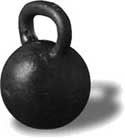
I'll start with saying kettlebells are something that most people should be doing. With the static and seated nature of modern living, glutes and low abdominals are too underactive, low back, hip flexors and hamstrings are generally speaking too dominant and kettlebells help with all that as well as improving cardiovascular fitness, strength, flexibility and they're no impact on the joints when done properly.

They're not everything but can form a great foundation. Who's next?

Wednesday, April 28, 2010

Does state influence exercise?

We all know that doing exercise in some shape or form can be great for our health but why is it important to be in the right state?

Well, there are a number of reasons. Firstly, however you are feeling will control your hormonal balance, the level of cortisol, adrenal function and this manipulates how your body creates and thrives with energy. Already, just by thinking in the right way you will make massive strides towards getting your body to deliver the right response for you whether it be weight loss, increase stamina or strength. It is true that being upset, angry or depressed increases fat storage. Think of it like this, primally, times that would stress the mind and body would be starvation or being under threat. As a coping mechanism, the body would realise this and store fat as a means of survival.

Secondly, your state dictates your mental energy, neuromuscular focus and your muscular response. If you want to go running but you're feeling lousy, worthless or upset then your body won't be operating properly. You'll have less access to energy reserves, your body will be at greater risk of injury and you'll be missing out on a heightened sense of control physically.


So, how do you adopt the right state for what you want? Well, state should be situational just like many things. By matching your state to the task in hand then you'll be setting all your internal control settings to the right coordinates. If you are wanting to stretch and increase flexibility then you should be relaxed, decresing muscular and neurological tension. If you're going to lift weights then feeling strong, decisive and engaged would help make your body alert, fired up and present.

By taking a few minutes prior to exercising and reflecting on the type of exercise in hand, you can start to identify what state is needed. Once you know the state, then think back to a time when you had this, put yourself mentally back in that state and walk with it into the new session.

Again, primally, fight or flight responses would control the mental state relative to the situation accordingly to give the body what it needs. In times of danger, being alert to move quickly, be strong and decisive would improve the likelyhood of survival. Just because modern lifestyle doesn't involve the same dangers or conerns doesn't mean that the bodies requirements aren't the same.

As a final thought, focus and engagement are important but don't ignore the importance of play. Being social, fun and interactive with movement is very much a natural thing and should be incorporated into your habits.

Phill

Wednesday, April 21, 2010

Why is exercising too much dangerous?

It's quite strange that over the last few years my life has been shaped around exciting both trainers and individuals about exercise and movement and here I am now talking about putting a cap on the exercise you do. The two biggest trends that I see are that people either don't exercise enough or they do too much. It seems that exercise is like a drug, used in the right way, it can do wonders for the body yet used excessively, it can be dangerously harmful.


We're all well aware of the benefits of exercise and how it remains a crucial part of a healthy lifestyle yet few really understand the physiological and psychological implications of over-exercising. It's worth having a look at some of the common issues that arise:
  • Instead of building muscle, too much exercise destroys muscle as the body receives insufficient nutrition and recovery time forcing it to break down muscle tissue for energy.
  • Bones, cartilage, tendons, ligaments and joints are all under excessive pressure and often become damaged. When minor injuries aren't allowed to heal, these often result in long term damage.
  • Females over-exercising can disrupt the balance of hormones in their body including the menstrual cycle. Some females lose periods altogether and can suffer from premature bone loss.
  • Exhaustion and fatigue.
  • An even bigger threat is the strain put on the heart and cardiovascular system. When an individual over-exercises as well as committing to unhealthy weight loss through crash diets, restricting intake, diet pills or vomiting, the stress put on their body can be sometimes a fatal mixture.
  • Depression and anxiety can plague compulsive exercisers. Fixated on keeping fit completely rules lives. With low self-esteem, negative self-image and often a feeling of worthlessness, individuals can often avoid withdraw from friends and family to spend excessive time fixated to exercising.
Well, how can we help. Spotting warning signs will help identify this common problem. A person may be exercising compulsively if he or she:
  • Never skip a workout, even if tired, sick or injured
  • Doesn't enjoy exercising yet feels obligated to do it
  • Feels irrationale guilt or anger when missing a workout
  • exercises for twice as long as normal in the event of missing an exercise session
  • Is constantly preoccupied with his or her weight, shape and exercise routine
  • Doesn't like to sit still or relax for constant fear of not burning enough calories
  • Has lost a significant amount of weight
  • Exercises more after eating more believing that meals must be 'burnt off'
  • Skips meeting friends and family and gives up responsibility to spend time exercising
  • Seems to base self worth on quantity of exercise or effort levels
  • Is never satisfied with his or her personal achievements
Spotting them is half the battle. Remember that in your opinion, it may seem blatantly obvious that their exercise habits or under eating habits are compulsive. Yet these are part of what the individuals believes and dismissing these as excessive and ridiculing them may not be a great way to improve rapport or understanding. Be kind, loving, encouraging, listen and try to help the individual become more confident. In extreme cases, always seek professional guidance. This ideally would be with the permission of the individual but compulsive habits can be fatal in extreme cases. Let common sense prevail. 

Wednesday, April 14, 2010

Are you sitting comfortably?

Ok, the last entry was not so much of a nutshell and more a giant coconut shell so my job here is to be a little more succinct.

To wrap up the 6 key points of health I'm going to talk a little bit about recovery and relaxation. Something that seems not to be a common part of modern living. Work is hectic, home is hectic, family is hectic, having an iPhone is hectic, let's face it, life is pretty hectic...if you allow it to be!

Just as, if not more important that doing exercise, recovery dictates whether or not you acually benefit from the exercise and the healthy food that you're taking on or whether it causes stress and damage.


The key thing that drives this is the nervous and hormonal system. These things must be considered. You have probably heard the term fight or flight. Todays society can often cause people to remain in a fight of flight state for long periods of time. This can mean constant pumping of adrenaline into the body, elevated heart rate and blood pressure and the enhanced release of cortisol or other state hormones. These are the key control units that make certain things happen. For example, if you have are stressed about something, regardless of what activity you are doing (running, watching TV or eating) then your body releases cortisol.

Cortisol can be a positive input to the body when not prolonged: increased cognitive function, temporary increased energy levels, immune function and inflammatory response. However, when state isn't returned to the relaxation response then the body can suffer: blood sugar imbalances, supressed thyroid function, decreased bone density, decreased muscle tissue, high blood pressure, lowered immunity and increased abdominal fat.

There are a number of key aspects to recovery and improving the relaxation response:
  • Getting quality sleep - everyone is different and notice that the term is quality. Not just having enough sleep but real quality. Our ancestors used to sleep from dusk until dawn. If you're waking tired then the quality may not be there.
  • Clearing the mind - the conscious mind is not designed to be constantly task orientated. The unconscious mind can keep whirling whilst you refresh your conscious. Think of it like a web browser, when you open more and more windows when surfing the web, the speed suffers and becomes disorganised. This is precisely what happens with the mind. Try and clear your head atleast once daily. Whether it is music, stretching, going for a long walk, exercise or kareoke. Clearing the conscious mind is essential
  • Muscular Recovery - When your body has undertaken a demanding or physical task, let it recover. Long runs, intense exercise, lifting weights or manual work pull, stretch, impact and ask a huge demand of the body. The only way you'll recover is by giving the entire system time. Upto 48 hours is often necessary for the muscles to repair and as you get more and more in tune with your own body you'll learn to know what it needs to fully feel repaired, strong and revitalised. (Starting exercise feeling sore, tired and low in energy is a very clear message - your body isn't recovered, therefore it won't benefit optimally)
  • Nutrition - Getting the right sort of foods into your body is essential. Remember that for the purpose of recovery, your body does not store lots of readily available energy stores. When exercising, post exercise nutrition is paramount. Think of it like hunting, primal man worked hard for a catch and enjoyed the feast soon after. If your body works hard then enjoy your catch straight away. The sooner the better as your body will crave energy - if you wait over an hour then your body will have already started to look elsewhere for energy supplies (your muscles)
  • Hydration - As I mentioned previously, everything that occurs in the body requires the presence of water. Regular sips are best and avoid naughty disguised wannabees like coffee, cola, sugary drinks and other fluids that do not hydrate the body one iota. Also, drink water at room temperature to benefit from it more rapidly.
Hope this is useful. Just about to get our new outfit site launched - exciting times. http://www.outfit-uk.com/

Phill


Saturday, April 3, 2010

Exercise in a nutshell

Well, here is me trying to wrap another huge subject up in a very short effort. Exercise is one strange topic and I honestly don't feel like it is truly understood at all. In general terms, people seem to do far too much of it or not enough. So, how can we get it right? Just like many things - unfortunately, we're all completely different machines and therefore cannot operate by the precise same guidelines. Understanding your own body will help you move towards finding out how best to service it.


If you look at modern lifestyle, it is so far completely removed from not just a few thousand years ago but a few hundred years ago. Firstly, we spend hours in a sitting position, this just isn't natural and causes no end of damage from a functional perspective. In short, hip flexors become hypertonic, shortened but weak, glutes become phasic, lengthened and inhibited which then causes the stabilisers of the hips, spine and organs (the core) to then become inhibited which forces lower back muscles to take over in holding your torso up-right. We are animals and if you look at the animal kingdom, I'm sure we could all agree on a number of instinctive priorities which reside over most carnivores: hunting, forraging, building home, maintaining home, procreation and upbringing of young. Well, many of those still remain relevant but some have hugely evolved. Hunting and forraging is done mainly in supermarkets, online, over the phone and at the nearest fast food spot. Building home is done by builders. Maintaining is done with a vacuum cleaner, a feather duster and some Mr Sheen. Ok, you get the picture, I could go on. The fact is that whilst lifestyle has evolved massively, the body's requirements haven't and the clear evidence of this is that obesity levels have never been so frightening, back pain, chronic injury, RSI, disease, are all terms that scarily we can associate with close friends and family.

Here are some simple pointers that can help you make the right decisions when exercising:

  1. Mix what you do! The body is designed to move and function in all manner of ways. By mixing steady controlled movements with higher intensity, you'll support your body by achieving greater stability and not just lots of mobility. Repeating one specific pattern like cycling over and over again can cause problems. Include as many different patterns as you can into your exercise: extension, flexion, squat, lunge, push, pull, hold, roll, jump, walk, crawl, run, bound, abduct etc. Not only will your body benefit more, your exercise will be heaps more interesting.
  2. Work out and work on! Since the 80's Jane Fonda revolution, many people seem to believe that exercise has to be fast tempo, sweaty and constant hard work. As I've already mentioned, the body is designed to do all sorts of key functions, working on your posture and alignment is just as important as getting moving. Having an efficient kinetic chain (your musculature and skeleton) will help you get the most out of everything you do.
  3. Commit to things you enjoy! If you don't enjoy something, don't kid yourself and find something else. Using running as an example, many people don't like it yet force themselves with grimace and all to put on the trainers and take to the streets. Going for a long and brisk walk would be just as, if not more beneficial.
  4. Include more social activities! You may be in a minority and not enjoy the company of others but we are social creatures and right to a genetic level, we need interaction, support and social engagement. Not only will the time seem to pass quicker, but you'll learn more, have more motivation and statistically, you're more likely to stay with it.
  5. Make time for recovery! Think of it like this, if you were having to hunt for food and you just had made a really tough but great catch which took the wind out of you, then you won't need to go hunting immediately. We hunt because we have to and the eating and recovering part are essential to your body for it to actually benefit. Remember that exercise is stressing and damaging that body. The only reason that we benefit from it is through the repair that occurs afterwards. If this is non-existant then so is the benefit.
Hope this is useful and I'll be adding more to this rather large topic in future blogs.

Phill