Wednesday, December 1, 2010

Safe exercises when it's snowy and icy

The winter showers seem to have painted the UK white over the last few days and hugely affected peoples plans, work and home life.

If you're finding that the snow is hampering your activity levels at the minute then make sure you read the 3 top ways of staying fit despite the big white outdoors:

  1. Get stuck in - You're never going to defeat the weather so you may as well accept that it'll do it's thing until it decides to do otherwise. Whilst it can be disruptive, snow provides a completely new dimension to training that other weathers just can't provide. Make sure you're wrapped as much as possible (waterproof gloves are best) and try some of the following. (30-40 minutes is plenty):
    • Make a snow man, why not make the biggest snowman/woman you've ever made and better yet, if you are near to another thumb twiddling person, get them involved. Either race to see who can make the biggest and baddest or make an almighty beast together. Incorporating deadlifting, pressing, pulling, twisting and squatting, this task hits all the major movement patterns.
    • Clear the path / drive of snow. It is probably best that you do this one when the snowfall has stopped to avoid frustration but shovelling your paths will not only provide you with a safer thoroughfare but it'll get you working pretty hard. Don't have a driveway? There must be a road nearby, clear a good 10-15 meters of it.
    • Go for an arctic hike. Make sure you are well wrapped up and take some water too. This is better and safer than running in the snow as it is not just slippy but hugely uneven and every step is a gamble whilst not being completely certain of what lies below the snow. Not only will hiking in snow get you working even harder than normal hiking with the deep surface but it'll engage your stomach more with every step having to come higher and further to the front.
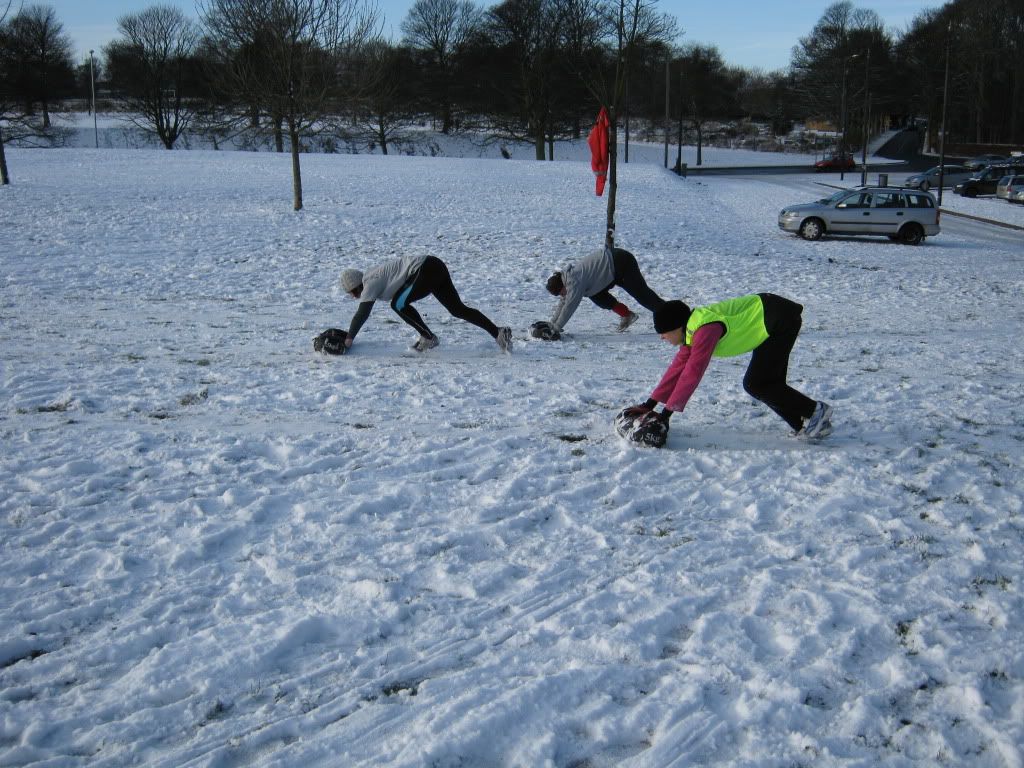
    • If you're wanting to be a little more adventurous then try sleigh pushing. Our outfit members love these, killer exercise but don't half get your body working like never below. We use powerbags but a small badger on a sledge would prove a fantastic alternative

  1. Do a home circuit. You really don't need equipment to get the best workout. The truth is that a lot of the fitness based equipment can distort posture, just check the following video of my brother on a pec dec for some evidence http://www.youtube.com/watch?v=3wWrLA_LT8s. The best tool we all have is our own bodies. Weight can be good but only once you've mastered using your body first. There are loads of programmes out there, from yoga, pilates, simple circuits and all have benefits. However, we've found that whilst each style of bodyweight training has it's own benefits, there is no single style out there that gives you strength, stability, flexibility, body conditioning, aerobic fitness, balance, power and so we put together our very own Primal Flow. Why not try one of our circuits and subscribe to our YouTube channel to receive all our coming programmes. They're short, sharp and maximise using all of your body:
  2. Sort the house out. It could be cleaning, DIY or doing those jobs that you never seem to do. You'll be suprised at how much of a workout spending a morning hoovering, washing, polishing, ironing or cleaning the oven can be. Whilst at Jenny's house recently, my mother-in-law made a very true observation about the rising level of overweight and obese people. People just don't have manual jobs anymore. Spending some time on your feet doing jobs will not only kill the calories but it'll fill you with satisfaction after doing such a great job. 
 Hope this helps!

Monday, November 29, 2010

Avoiding looking like a Christmas Pudding

Christmas is a time for celebrating, spending good quality time with family and relaxing. Having personally spent one christmas out in an area of conflict, it means so much to be able to have everyone I love in the same room and be able to just unwind.

Despite Christmas being just one calendar day, the whole festival stays for weeks if not a couple of months. It's the end of November now and Christmas decorations have been in the shops for weeks and many houses are already complete with tree, lights and more. With this early snow fall - it really does add to the magic of this time of year.

There is one thing to be aware of though through the festive term, watching all those little treats, chocolates, mince pies and glasses of mulled wine. Go on then...just one more!! As well as many houses maxing up with the decorations, one of the unwritten additions seems to be the obligatory tin of never ending fancy chocolates.

If you want to avoid looking like a Christmas pudding come January, here are 5 top tips to keep you on track:

  • 3 is the magic number. As a health practitioner, I could say avoid chocolates, sweets and all those treats and replace them with fruit and nuts, but I truly don't believe in complete abstainence. It tends to result in over indulgence. 3 is a good number when it comes to fancy treats, drinks or other little festive joys. It'll give you the enjoyment without the bloated and over-indulged uncomfortable feeling afterwards. Obviously, this rule wouldn't apply with Christmas dinners...that would be OTT.
  • Drink water! Just because it's cold outside doesn't mean that your body doesn't need hydrating. If you're using hot-chocolate, coffee, tea and mulled wine to keep yourself hydrated then your metabolism will have left the office for the day and your energy levels may go with it. Have a glass / bottle with you an sip regularly.
  • Stay active. It may not be ideal running conditions and your car may be stuck to the driveway but these things shouldn't bring your activity levels to a standstill. Get wrapped up and go for a walk. A good brisk walk is great exercise and for the more adventurous, there are plenty of exercises you can do with no equipment whatsoever at home. Try one of our Primal Flows for size, it takes no longer than 20 minutes and will hit pretty much every muscle in your body. Click here to get stuck in. Alternatively, you could always sign up to our FREE online fitness membership packed with tailored exercise videos, nutritional guidance and progress tracking.
  •  If it snows, get the sledge out! There is nothing better than zipping down a hill with a high pitched scream...expecially as an adult. You'll be surprised how many calories you burn off taking the sledge to the top of the hill again too.
  • Finally, don't skip meals. If you are finding yourself visiting friends and family, being greated with a handful of snacks and not being overly hungry at meal times, avoid skipping meals. Snacks are precisely that and won't provide your body with much in the way of nutrition. Moderate the snacks by sticking to the first tip and be sure to eat decent meals. Freshly cooked with good wholesome ingrediants. Here is a good article with 10 festive meal suggestions.
Please feel free to add comments with your suggestions on avoiding the pudding look.

Wednesday, November 24, 2010

Bootcamps and Fitness Training in Leeds

I read a really interesting article in the Daily express online yesterday regarding bootcamps. You can view it via the following link:

http://www.express.co.uk/posts/view/213103/Are-boot-camps-harmful-

Whilst written by a conscientious fitness professional, the article expresses the concerns of users and potential users of outdoor bootcamps. I completely agree and empathise with the points and questions raised and am taking the opportunity to answer the questions on behalf of our Outfit (www.outfit-uk.com) model but also impartially.

(I'm shortening the questions due to me having limited time

1. Is there screening or individual assessment?

Aside of this being a legal requirement, it would be suicidal for any fitness professional to coach anyone without knowing their medical history, state of fitness and goals as a bare minimum. We of course screen every member and provide an optional full body MOT to all members.

2. Is there insurance?

Again a legal requirement and completely necessary. We ensure that all groups have at least £5 million Liability cover.

3. Is there a free trial session offered?

As a consumer, it is important to try something like this without having to commit with it being a unique service. Furthermore, we feel that contracts can be far too binding and we have a flexible month by month rolling membership to our groups.

4. What are the qualifications and experience of the instructors?

As someone extremely passionate about quality, this is one of my biggest problems with large areas of the fitness industry. People delivering in areas that they are clearly unqualified in. We see it all the time and certainly military bootcamps are particularly bad for this. As a training provider through skills active, quality assurance is paramount to maintain the quality of the values that we started with. All our coaches are fully qualified personal trainers, group coaches, trained on whatever equipment used, first aid trained and have at least 2 years industry experience.

5. How many members are there to every coach?

I've seen classes where 1 instructor is working with 30+ people. In my opinion, this is both unprofessional and negligent. There is no way that even the best coach on the planet can account for that many people ensuring they follow instructions safely and effectively. We operate predominantly on a dual coaching basis giving 2 coaches to every group but even in the event of only one coach being available, we limit the class size heavily. Dual coaching allows us to lead and provide continual coaching on form and technique.

6. Are there weights involved and are the instructors qualified?

This is so important and an area that is potentially more dangerous than just bodyweight exercises. I've seen some awful examples of coaches stepping into areas they aren't trained for. We run a kettlebell instructor course and on numerous occassions, we've had trainers start the course confessing to have used them with clients and by evidence of their technique, they have no idea of how to use them properly. We ensure that all our coaches are fully trained and confident on equipment.

7. Are there alternative exercises for varying fitness levels?

Thinking that one size fits all as a coach is a common mistake and I've seen countless examples where group members are being asked to perform exercises that they shouldn't be attempting.

When classes are run, we always demonstrate with both progressions and regressions allowing members to select the most appropriate level.

8. Are new members able to speak with existing members before joining?

Whilst I've never thought about this before, we always encourage guests to speak with the members on their free taster session. This is something that we'll certainly encourage a lot more proactively as it'll allow members to ask more openly without the fear of being sold at which on today's commercially driven world, is a refreshing opportunity.


- Posted whilst adventurising using BlogPress from my iPhone


Location:Wellington St,Leeds,United Kingdom

Monday, November 15, 2010

The Ultimate stomach without sit ups - part 3 of 4

Now that you've mastered the basics of using your stomach through breathing and core control, we're ready to step forwards to the next level. However, if you're not too confident that you've mastered these key points then I recommend that you spend some more time mastering the movements and exercises from parts 1 and 2.

Assuming that you have done those and you're confident with them, let's turn up the volume a little. You're possibly curious to know what type of exercise I'm going to suggest now to really start working the stomach. It's been such a saturated Market over the last 10-20 years aimed at stomach exercises. From electrodes being stuck to your stomach, ab rollers, specially designed clothing, bizarre footwear to hula hoops and all sorts of other weird fads. The stomach seems to be an area that we're all very conscious and sensitive of. Market history shows that we're willing to spend lots of money on solutions that take away the worry and achieve results. The good news is that you don't have to spend money on anything that will most probably end up in the bottom of the wardrobe.

It may come as a suprise that my exercise of choice for the stomach is the squat. Done properly, this exercise is incredible for the abdominal wall. Firstly, if you've been to a body pump, yoga or circuit class then you may have a very different idea of a squat than what I'm discussing. Watch this short video to make sure we're both clear and singing from the same sheet:

The best exercise for a ripped stomach
Whilst in the video, I'm using a weight (kettlebell) this isn't essential straight away.

The three essentials are the range of movement (all the way down), maintaining a strong and straight spine and finally good breathing pattern.

You may have been told only to squat to knee height or half way down before but you only have to look at any toddler, child or many people living in the developing world to see that squatting almost all the way to the ground is natural to the human body. It is crucial to work through full range for many reasons. One being that it will help prevent your hip flexors from dominating your abdoman during bending forwards and other movements. Furthermore, working any muscle properly, full range is essential. If you have knee, ankle or hip problems and you feel this would cause problems then consult a sports physio or sports therapist first.

Secondly, keep your back extended through the movement. Because we all sit down for hours, our ability to hold the spine in extension unsupported isn't generally as good as it should be. To get the most from the sromach, keeping extension and using the stomach to support this is key.

Finally, use the breathing habits from part 1 in the movement. We suggest that breathing in on the descent and breathing out on the standing phases are optimal, however, this is largely preferential. As long as you breathe and breathe abdominally, you'll be working well internally.

As you become strong and able to work through good range in this movement, look to apply load as the video shows.

When it comes to exercise, always be conscious of the internal workings of the body. Think of it like this, just because a car is moving forwards doesn't mean that it's supposed to be. It could be rolling downhill, it could have been nudged or the breaks may not be working.


- Posted whilst adventurising using BlogPress from my iPhone

Monday, November 8, 2010

Our Charity Event - Let's Take it Outside 2010

Just 2 weeks ago, we ran a charity event raising money for two incredible causes in Newcastle Freeman Hospital and the CCU of Bristol Infirmary Hospital. The event marked our company's 2nd birthday but the driving force was raising money for causes that supported a very close friend, Martin Hall who sadly passed away earlier this year after a long battle with a complex heart condition.

Despite having a condition that stopped Martin from joining in many activities, he always involved himself even if it meant from the sidelines.

We were absolutely blessed with an incredible degree of support for the charity event. This came through an amazing range of prizes, donations, event support, media coverage and people giving up their prescious time to help out. I'm including some huge thank you's at the bottom of this blog for those that supported and made the day a complete success.

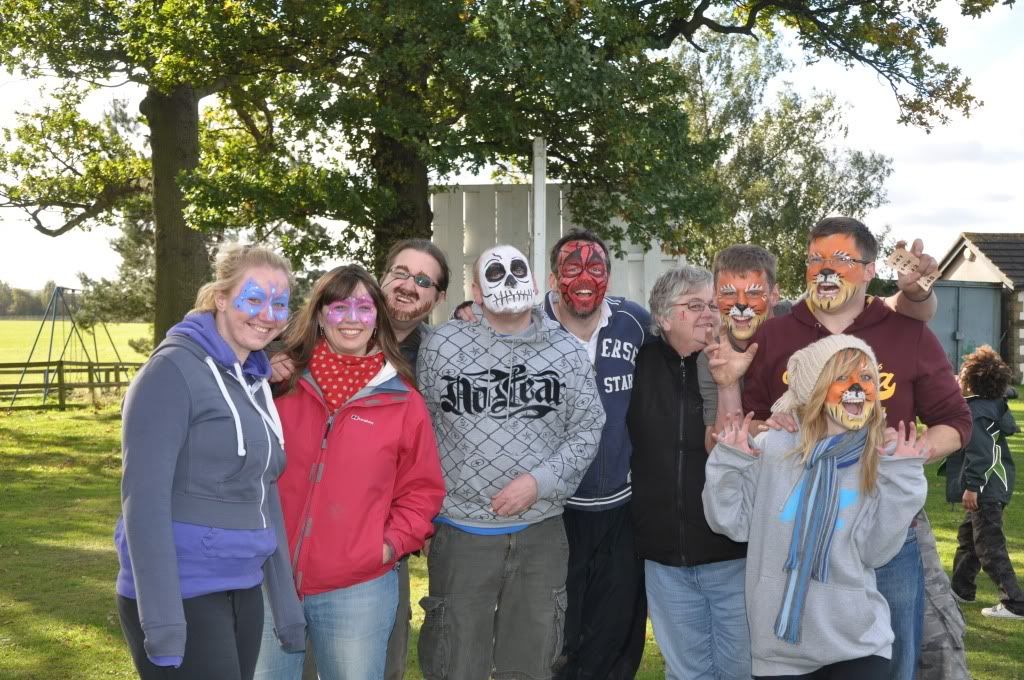
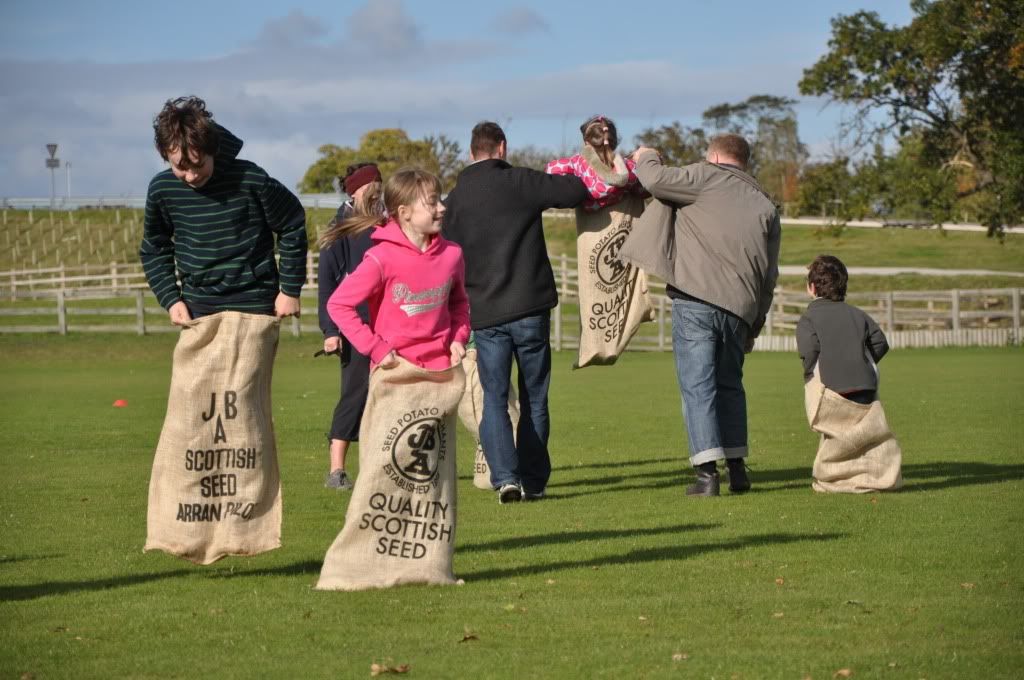
The event was an absolute success and everyone got stuck in taking part in the activities, challenges and many brightened up the day with some impressive face painting. We managed to raise over £700 for the charities which we're delighted with.

The results of the actual events will be going up on our main website 'Hall of Fame' very soon (http://www.creatingchaos.co.uk/) and you'll be able to see some of the blistering results achieved on the day.

Here are some photo's from our colourful day in October...

Our brutal battling rope challenge in full flight


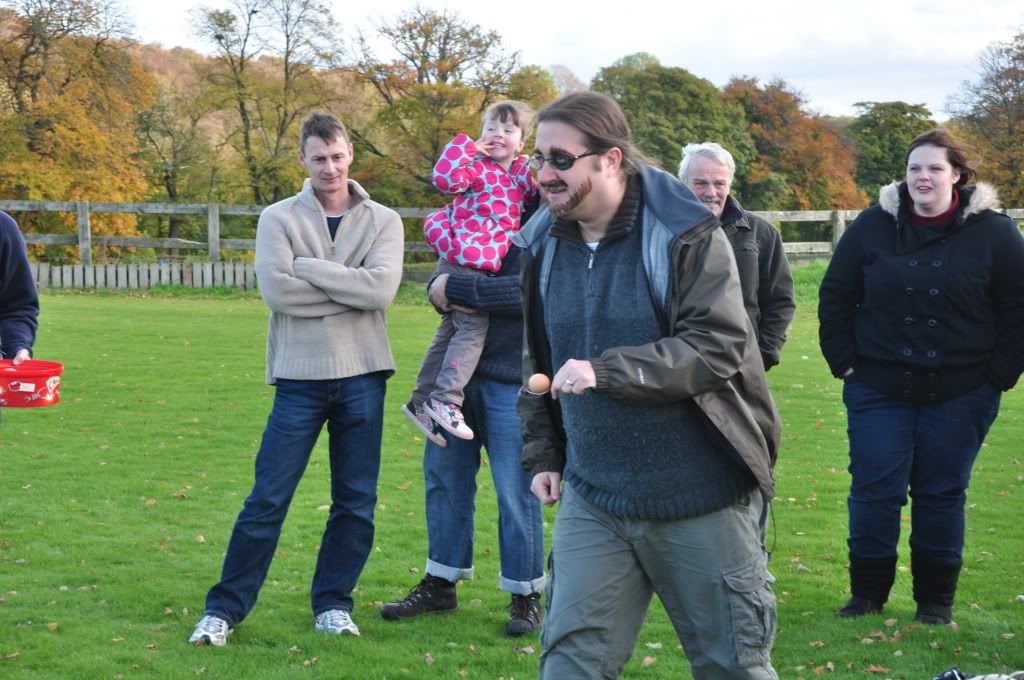
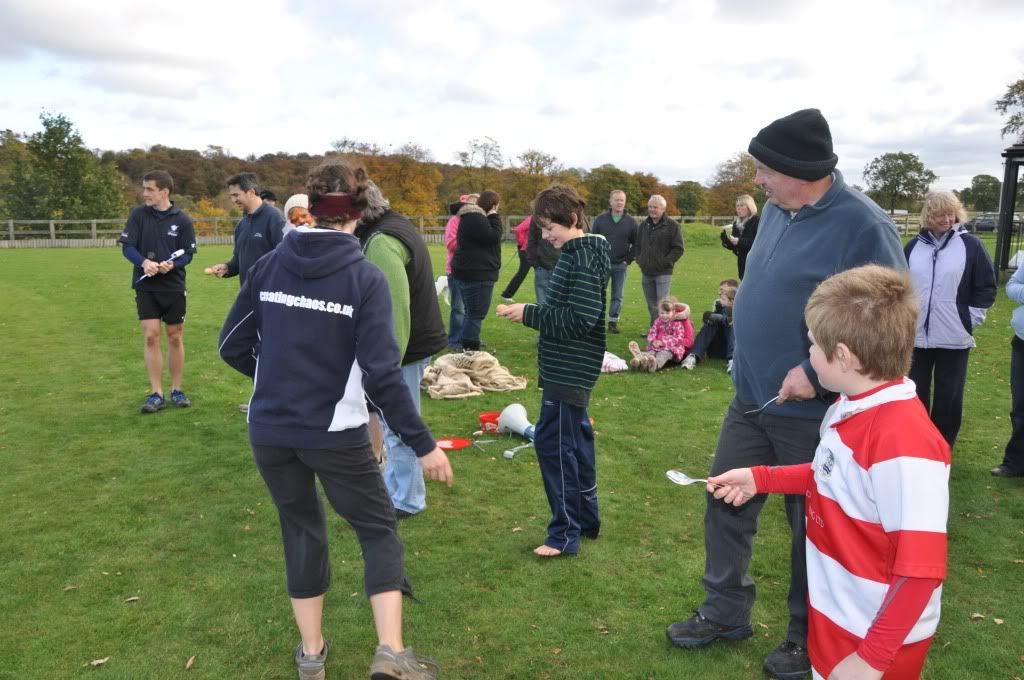
A pirate with an egg


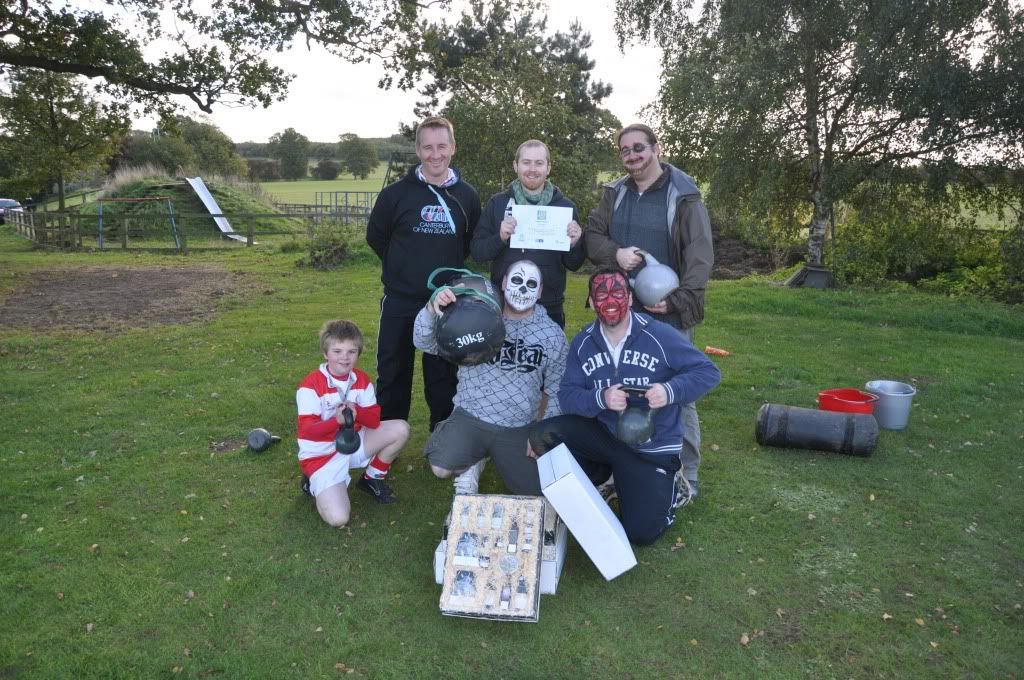
A colourful crew preparing for Halloween


We had the rule book stolen...may have been the pirate!

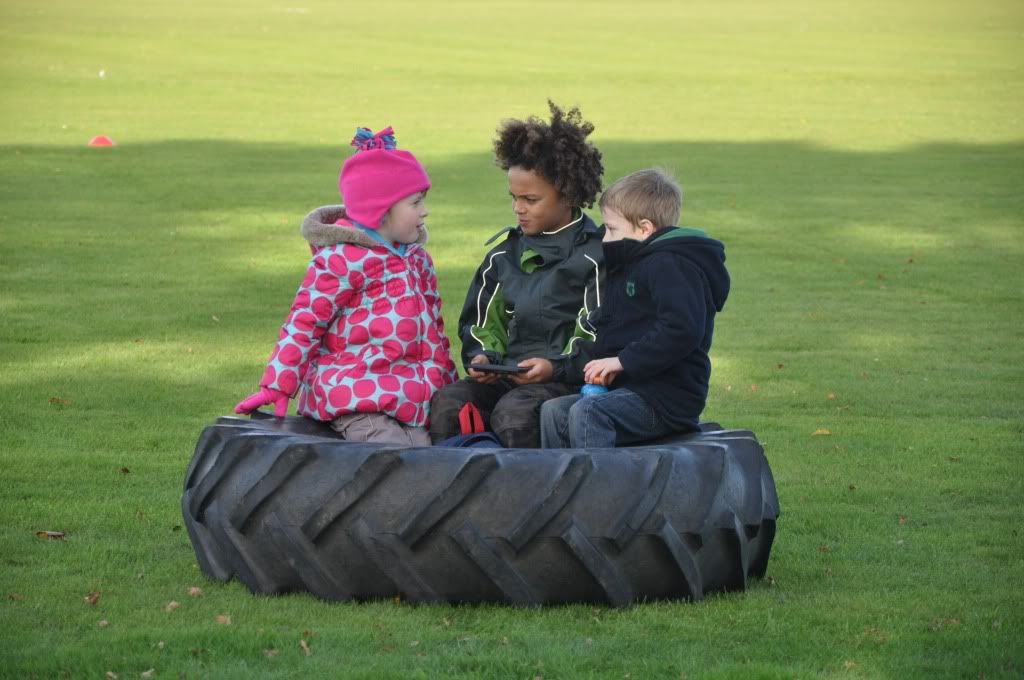
3 younger competitors dicussing how to flip the tyre


Jenny laying the law for the egg & spoon


One of the winning teams

In no particular order, I'd like to say a massive thank you to the following people:

We had an absolute ball and we'll most definately be running the event next year...bigger, better and possibly a warmer month :)


Wednesday, November 3, 2010

Pointless exercises

Having arrived slightly early for a meeting with a University, I thought that I'd use the 20 minutes to put together a blog.

Whilst down in Bath this weekend, Jen and I visited a gym on Saturday. It's rare that I visit a gym but it was actually really interesting. A hotel gym with old equipment, machinery and decor on the walls that belonged to a good few decades ago. What was also interesting was, as it was like going back in time, the diagrams of exercises on show were way out of date yet for many still form part of their work outs.

Inspired by this retro experience, here are 4 pointless but still very used exercises:

Sit Ups - probably the worst exercise for postural dysfunction and muscle imbalance. The fact is that the hip flexors which sit infront of the hips between stomach and thighs are very facilitated in pretty much all of us. This means that they are working even when they shouldn't be, lunges, squats and many lifts are all swarmed by dominant hip flexors. Doing a sit up is just saying 'come on Mr Hip Flexor, work some more!'. Sit ups also encourage poor balance within the abdominals, rarely work full range, are uni-planar and often leave people with back or neck pain. If you want to work your stomach, change your mindset. Rather than isolating the trunk, think larger movements and learn how to breathe abdominally.

Side Bends - just to clarify, I'm discussing standing up, holding a weight in pne or both hands and then bending sideways. Firstly, is this movement natural or functional? Many people do this thinking that it will eliminate love handles or the comically described muffin top. It's important to know that you can't spot reduce when it comes to weight loss in a specific area. Apart from the movement forcing supportive muscles to become prime movers which isn't great, it's just a really awkward movement. If you're looking to reduce bellyfat then the biggest single thing that will reduce this is nutrition. Combined with a healthy exercise programme with sufficient recovery and you'll be well on your way.

The third is quite controversial as many people still use these which are front or side raises. To avoid confusion I'm referring to holding a weight in one or both hands and lifting the arms out to the front or side from standing position whilst keeping arms extended. Biomechanically, you ate either abducting the arms or flexing the shoulders. Both of these movements are natural functions of the body, however, in isolation, they don't encourage balanced function. Whilst the main part and top of the shoulder (deltoid) gets a great work out, this exercise doesn't require much effort from the most crucial aspect of shoulder stabilising known as the rotator cuff. The shoulder, as a joint, has the greatest range and mobility of all joints in the body and should be treated as such. Furthermore, isolating weighted raises tends to target the upper neck muscles which are often extremely over active through using computers and sitting at desks for long periods. This exercise can contribute to soreness and stiffness in the neck. To work the shoulders more functionally, why not try kettlebells.

Finally, looking at what I've already included, I'm going to break the mould as I've focussed heavily on isolated exercises and you've most probably identified that I'm not the greatest fan of these. The final exercise I'm going to mention is doing cardio without doing any strength/conditioning work. The fact is that running, cycling, rowing and many other forms of cardiovascular exercise are heavily repetitious. For joints to move, you need muscle and for joints to move through the same paths over and over again without being injured or overwhelmed with exposure, you need strong and well supported joints that are able to absorb impact and the exposure that you're asking of them. The problem being that cardiovascular exercise is catabolic in it's nature meaning that the body is in flight mode and more likely to break down muscle tissue. To understand this further, let's think back to the hunter gatherer instinctive existence of humans. It makes complete sense. The times when we'd be working cardiovascularly would be either hunting for food or fleeing from danger. The body is a magnificant machine and thinking about both situations, there is no gaurantee of getting food at the end. To this, the body goes into a survival state of breaking down muscle for energy as opposed to fat stores. This is a slower process meaning the body can work for longer and it also means that the body will benefit from the insulation of retaining bodyfat helping it keep hold of essential energy stores and maintain body temperature. You could argue that certain types of cardio work through resistance like swimming, hill running, rowing etc. However, irrespective of this, when the heart rate is above a certain level for a consistent duration, the body will work in a catabolic state.

If you'd like ideas on types of strengthening exercises then why not enjoy a free month on our online fitness membership www.creatingchaos.co.uk. You don't need equipment or even a gym membership. These types of exercises should be combined with cardiovascular exercise giving you a healthy heart and lungs.

- Posted whilst adventurising using BlogPress from my iPhone

Location:Wilton St,Middlesbrough,United Kingdom

Thursday, October 28, 2010

Inspired?

Fitness means different things to different people and used at different times. For some, fitness is exciting, enjoyable and people look forward to it, it means confidence and pure positivity. However, for others, fitness is a judgement, fitness is not enjoyable, has negative attachment and something that people dread.

Both perceptions are completely understandable. We all know that a level of fitness is good for the body. It reduces illness, sickness, improves wellbeing, confidence and much more. However, first impressions count and for many, their first experience of exercise was at a young age, possibly in a sport that they weren't particularly great at. These experiences stick and can last a lifetime if you let them.

However, if this kind of smudge distorts your thoughts on exercise then it's worth redefining what fitness is. Well, it certainly isn't competition, losing, being ridiculed, belittled or left feeling miserable.

We've already discussed that fitness does great things to physical and psychological health. We all know this and it's no grand revolutionary statement for me to say this. We are creatures of movement, hunter gatherers and with that, we have to accept the instinctive needs of our genetics. Our bodies require exposure and expeditions. We're designed to walk, run, jump, climb, throw, twist, wrestle and much more. Our evolution has for many, taken us away from these type of activities. There is, for our survival, no longer a need to do these things. However, as much as our lifestyle have evolved, our health needs are still the same. Movement facilitates and encourages many internal functions like digestion, circulation and healthy respiration. It releases endorphines making us feel good as well as natural adrenaline.

It seems that humans are better at providing advice, care and direction to others rather than ourselves. This is reflective of our compassionate, loving and parental nature. To love and care for people is our way. We are survivors and protectors.

With everything mentioned, what advice would you give to someone that you love about fitness and health? Possibly your son or daughter? Would you suggest fitness? With your answer in mind, would you suggest the same for yourself? If your answers are different then why? Let's face it, you can't truly love someone or look after someone else if you don't look after yourself? It gives us peace of mind to know that loved ones are in good health and taking care of themselves. When this isn't occuring, we worry and have concern. If you don't look after your own health then you aren't loving people or offering them peace of mind.

Exercise doesn't have to be miserable, painful or mundane. There are so many ways to enjoy activity that you could quite literally do something different for every day in your life and you still won't exhaust what is available.

My advice to help make sure that you keep going and stick with it are that you should be able to answer 'yes' to 3 questions with whatever actovity you do.

Are you learning or engaging in the activity? If not then you won't receive that mental stimulation that we all require.

Are you being challenged? If not then the chances are that you won't receive great benefits.

Are you enjoying it? If not then the likelihood is that you won't stick it out long enough to benefit.

It's always worth reviewing your activities periodically? Circumstances change and new experiences are what keep us ticking.


- Posted whilst adventurising using BlogPress from my iPhone

Location:Wellington St,Leeds,United Kingdom

Monday, October 25, 2010

The Ultimate Stomach without Sit Ups - Part 2 of 4

After reading and practising the breathing patterns in part 1, you'll be embedding great habits that can support exercise but it's worth mentioning at this point that you should always be conscious about this in movement and just naturally breathing too. If lifting or performing exercises and your back starts to really hurt or dominate an exercise that it shouldn't, the chances are that your breathing has become lazy and isn't engaging low and internal abdominals.

The next step is to now start being functionally strong. Well, what do I mean by that? It's all very well being able to perform something in isolation and in a controlled environment but if you're unable to do it through natural movement or in normal circumstances then it almost renders itself as pointless. I'm aware that walking around, pushing your stomach out and then breathing out hard would feel rather strange and possibly attract a few stares so let's just take 3 natural movements of the spine and master these first.

Flexion, extension and rotation. These movements occur through every single step you take, every time you stand up or sit down and pretty much most of the time through movement. The issue is that they become lazy so it's time to get the right muscles working.

Firstly, standing up in a normal standing position, whatever that is for you, I want you to flex and extend the spine and maintain those good breathing habits. Keeping legs relatively straight, I want you to reach down towards your toes and in doing so, breathe out hard and draw your low stomach in tight. After a couple of seconds, stand up again and draw a big breath in, looking to inflate the stomach and pull your arms out to the side and back to fully open up the chest. Repeat this movement10-15 times and again, practise it 2-3 times daily to start embedding strong and positive habits through normal movement.

Along with the above exercise, we need to encourage the same good habits through rotation which is the strongest movement plane of the body and possibly the least engaged in traditional exercise. Stand facing a wall at arms length, soften your knees and engage into your hips. Reach out directly infront and place your finger tips on the wall. Keeping your hips forward facing and one hand touching the wall, pull the opposite arm back (keeping elbow extended) to behind you so that your trunk twists and aiming to rotate through 180 degrees. As you go through this movement, breathe in as before (inflating the stomach), hold for a second and then reverse the movement back to the start (whilst breathing out) and alternate with the opposite side.

Doing these two movements together will create a strong and functional neurology for your core. Mastering the basics is the key to getting the great success that you want. After 7-10 days, you will start to notice that daily movements are engaging your core much more than before. Filling your glass from the water cooler, checking your blind spot whilst driving, all these movements are becoming more functionally sound.

For video interpretations of the above movements, check out our free online fitness tool to get tailored exercise programmes, nutritional guidance and our very own personal tracking system to keep you going in the right direction.

Sunday, October 17, 2010

Why runners must train for strength

Running is a fantastic way to keep fit and a natural movement for us as humans to do. However, it should come with a large warning sign, it is pure impact and many runners are guilty in thinking that running on its own, done enough, is a great way to stay in shape. My question to that would be "what shape"? It will work your heart and lungs fantastically and if balanced well, a great programme will help you achieve outstanding results but all this impact will take its toll. Only a few miles is several tonnes of accumulative pressure hammering down through your ankles, knees and hips and spine.


Without strengthening your joints, musculature and tendons, the skeleton itself will bear the brunt of this repetition and impact. Movements that should be considered ideal for running are movements that are going to gain full range through potential weaker or tighter spots. Typically, the problem areas are tight calves, anterior tilt of the pelvis, hyper-mobile lumbar spine and kyphotic upper spine with forward and internally rolled shoulders. Not too much to worry about then, seriously, no matter how poor you feel your posture is, you'll always be able to make huge improvements and often simple exercises can be the most effective.

Ideal exercises and patterns are squats, lunges, core exercises and movements that encourage complete shoulder extension and mobility in the thoracic spine (upper spine). Two strength sessions a week can be enough to support even a serious club running regime. Why not try a month free with our online fitness system to get you started with some effective and functional strenthening exercises.

Why treadmills aren't that great

As the most popular form of exercise on the planet, running is something that most of us have at least tried at some point. And as great as it can be, running must be respected and understood to what is being demanded of the body.

With gym machinery becoming more and more exploited as an industry that provides great and quick solutions for the consumer, the treadmill is now a household recognised term that offer an alternative to running outdoors. What many people don’t realise is that moving on a treadmill is worlds apart biomechanically from running outdoors. Notice that I didn’t use the term running but moving. Firstly, one point to note is that running, typically applies around 2 tonnes of pressure through the joints over just one mile. Therefore, it stands to reason that focussing on stability, strength and function would be a good idea prior to even considering running as an activity.
However, lets get back to treadmills and why they may not be that great. The reason I felt so compelled to write this is because, I don’t actually go into gyms that often yet on one of my last visits, I saw a queue of people waiting patiently behind 5 ‘in use’ treadmills. My gosh! So, you pay however much monthly to put your gym kit on and wait in a warmish place for a machine that doesn’t do your body many favours…insanity but maybe a little unfair as unknowingly, treadmills appear to be good. So let’s look at the differences. Treadmills have a belt that you can manually control to speed it up, slow it down and also, if you have a fancy treadmill, change the holding position of the ramp. This belt gets fed from the front, underneath the user to the back requiring the user to lift one foothold and then replace it down in the same actual place in space but a more forward point on the belt. There is no requirement to actually drive the body forwards but just lift your feet alternately and then place them back down.

We are all aware that the human body is an incredible device. It’s natural ability to adapt to situations and environments has maintained our survival over thousands and thousands of years. It does this by being efficient, streamlining it’s own need to expend energy and perform. In the above situation, this habit can encourage the body to distort the intended running pattern into merely kicking heels behind the body as the belt zips through. Without having to drive the body forwards, there is no real need for hip flexion which is an essential part of the running pattern.

So, what does this mean in bigger terms? Well, as modern lifestyle sees many people spend hours seated daily, slumped over a computer, there are many very common physiological imbalances stemming from this which lead to certain areas of the body becoming dominant leaving neglect in other areas. Treadmills don’t encourage the dormant areas to become active which can allow this compensation to just continue. These improper musculoskeletal relationships distort posture, movement even further and can lead to pain and chronic injuries. The most common areas of disaffect are:

  • knee instability problems
  • weak lower abdominals
  • weak hip flexors
  • tight and restrictive lower back extensors
  • immobility in the thoracic spine (upper back)
  • tightened chest and shoulder muscles
To add insult to injury, when muscles are being worked but don’t have optimal range or flexibility then they will not fully benefit. Running further or more or harder is not going to make the difference. The key is to get everything working properly. When your car starts making rattling noises or needs the tyres inflating, the car will not be working to it’s full potential and the body is no different.

My intention is not to fully slate treadmills as I believe they do have a place. In rehabilitation, they offer a very controllable environment to monitor and gradually progress variables to safely bring individuals back from injury, but when it comes to free moving and efficient bodies, they may not be the greatest solution.